Q Q Q Q Q Q Q Q Q Q Q Q Q Q Q
News

Our software ensures the success of our customers’ projects.

Our software ensures the success of our customers’ projects.


There are people who know early on where they want to go. And then there are people like Stephan Munsch, who find their path through curiosity and exploration. Stephan shows that a career in IT doesn’t always have to be linear and that professional growth often begins the moment you dare to take the next step, even if it doesn’t feel comfortable at first.

Stephan is a Software Engineer at QAware. He is currently working on a project for a globally operating reinsurance company. But behind his professional role is a person who brings much more than “just” technical expertise. When you talk to Stephan, you quickly notice: this is someone who approaches topics with calmness and clarity, who reflects, questions, and brings a very grounded mindset to software development. Perhaps it is exactly this mix of precision, humor, and genuine curiosity that makes both him and his work so unique.


What many people don’t know: the distance between code and costume is often smaller than you think

At the beginning of the interview, Stephan shares something that many might not associate with a software engineer: he does LARP - Live Action Role Play. More precisely, medieval improvisational theater with elaborate roles, costumes, and great attention to detail. Sometimes this even means spending several weekends sewing an authentic cloak by hand for an event.

At first glance, this might seem unusual - but on closer inspection, it fits surprisingly well with his professional role. It’s about creating worlds and immersing yourself in new contexts. In a working world that is often loud, fast, and purely functional, such a hobby almost feels like a consciously chosen counterbalance and at the same time an extension of a key skill that is also valuable in IT: the ability to think your way into systems and complex environments.


A career in IT doesn’t always start with a big “aha” moment

Stephans first contact with IT was rather unspectacular. Typing classes at school were not exactly inspiring. Things only became interesting when a new teacher approached computer science differently: understanding binary systems, writing first small Bash scripts, and realizing that something happens when you give a system logically structured instructions. This feeling - that an idea can turn into functionality - became an important entry point.

What followed were steps that didn’t necessarily match the “classic” path - but that’s exactly what made them valuable. Stephan first completed an internship as a system administrator, then his vocational training at the same company. Later, he decided to obtain his university entrance qualification and went on to study computer science at Rosenheim Technical University. First a bachelor’s degree, then a master’s. From embedded systems and hardware-related development to artificial intelligence as a specialization in his master’s program. A journey that clearly shows: growth is not linear. It is shaped by decisions - and sometimes by the realization that you have to create the next step yourself.

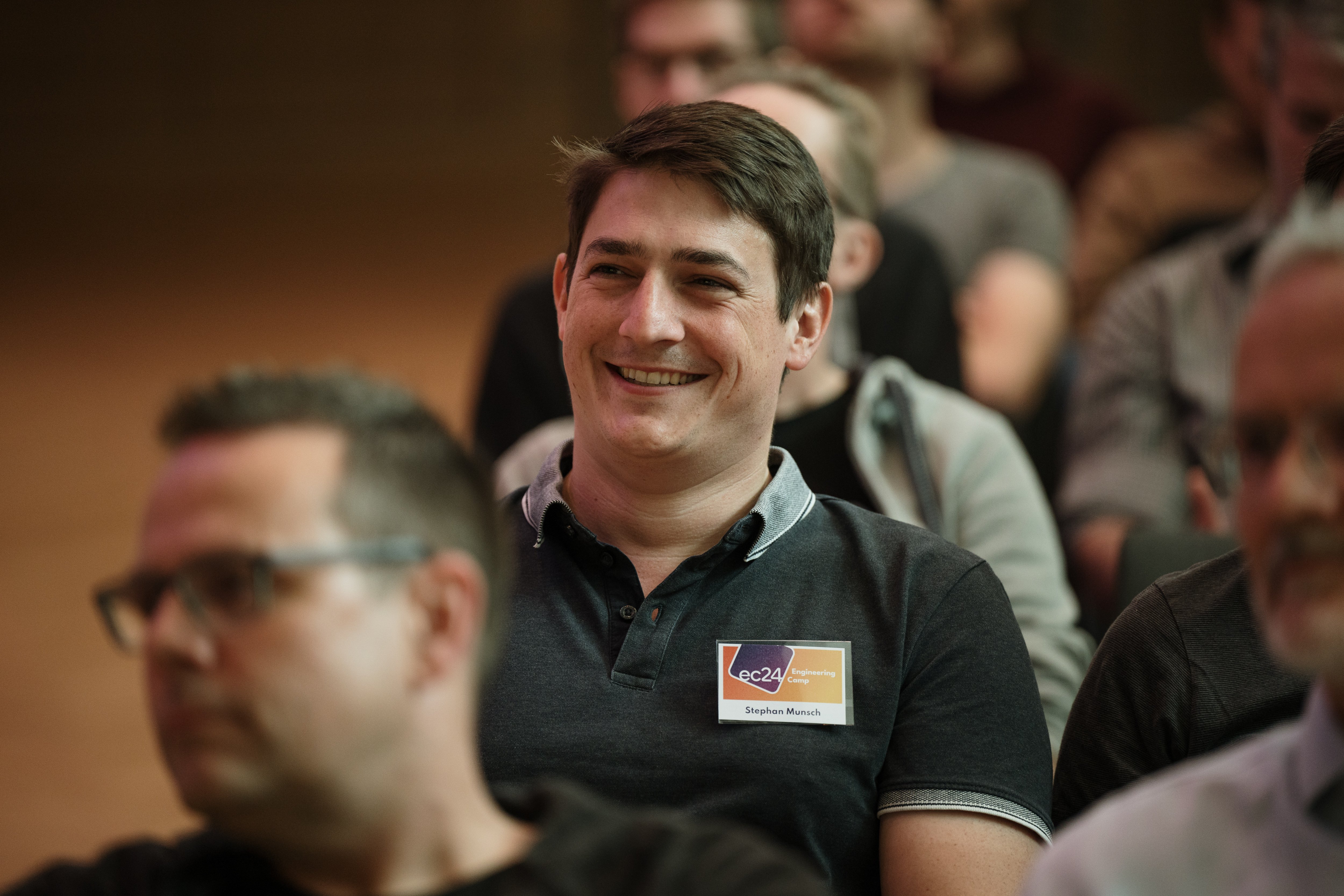
QAWare-EC-2024-1439

How QAware became part of this journey

Stephan joined QAware as a working student during his master’s studies. He initially worked on internal topics and, among other things, contributed to the foundation of the “Hausmeisterbot,” a tool for automating processes in the technical infrastructure. He later moved into a project for an international automotive manufacturer, worked on an electronic parts catalog, and was involved in various projects in different setups.

From his perspective, this is both an opportunity and a challenge. Experiencing many projects quickly builds both technical depth and breadth. You get to know different contexts, requirements, and ways of thinking about architecture and domain logic. And this is exactly what becomes a strength - especially in collaboration with clients.


A project that shows how real impact is created

One project that stood out to Stephan was in the field of tunnel construction. Together with his team, he worked on predicting the wear of cutting tools used in tunnel boring machines, based on data collected over years from various drilling projects.

The challenge was highly relevant: when tools fail unexpectedly, maintenance becomes extremely costly in terms of both time and money. At the same time, failures are difficult to assess externally because the machines are not accessible during operation.

The task was to identify patterns in the data and develop a model capable of predicting critical states. The result was not only technically interesting but also highly impactful: knowing earlier when maintenance is required allows for more stable schedules, reduced downtime, and better resource allocation. The project even resulted in a scientific paper - an excellent example of how deeply QAware engages with domain-specific challenges and how data-driven work translates into tangible value.


What collaboration at QAware feels like

Stephan’s description of collaboration at QAware is perhaps one of the most powerful parts of the interview because it is so concrete. He doesn’t just say that “everyone pulls together” - although that is true. He explains what that actually looks like: if someone comes with a problem and asks for a moment of your time, the answer is never no. People make time - because great solutions are built together.

He also emphasizes the way feedback is given. At QAware, it’s not about pointing out mistakes harshly or using criticism as a display of authority. Feedback is constructive, supportive, and focused on improving as a team. It’s not about devaluing individuals, but about collectively finding better ways forward. This is a significant difference compared to environments where feedback often only comes after frustration has already built up.

And this is where a key difference becomes visible: good collaboration doesn’t mean everyone always agrees. It means everyone shares the goal of getting better together.

This mindset is a core part of what makes QAware a special place. It has a direct impact on quality. Because when people feel safe to ask questions, address uncertainties openly, and share ideas, the result is better software. This is not a “soft” cultural factor - it is a real lever for quality.

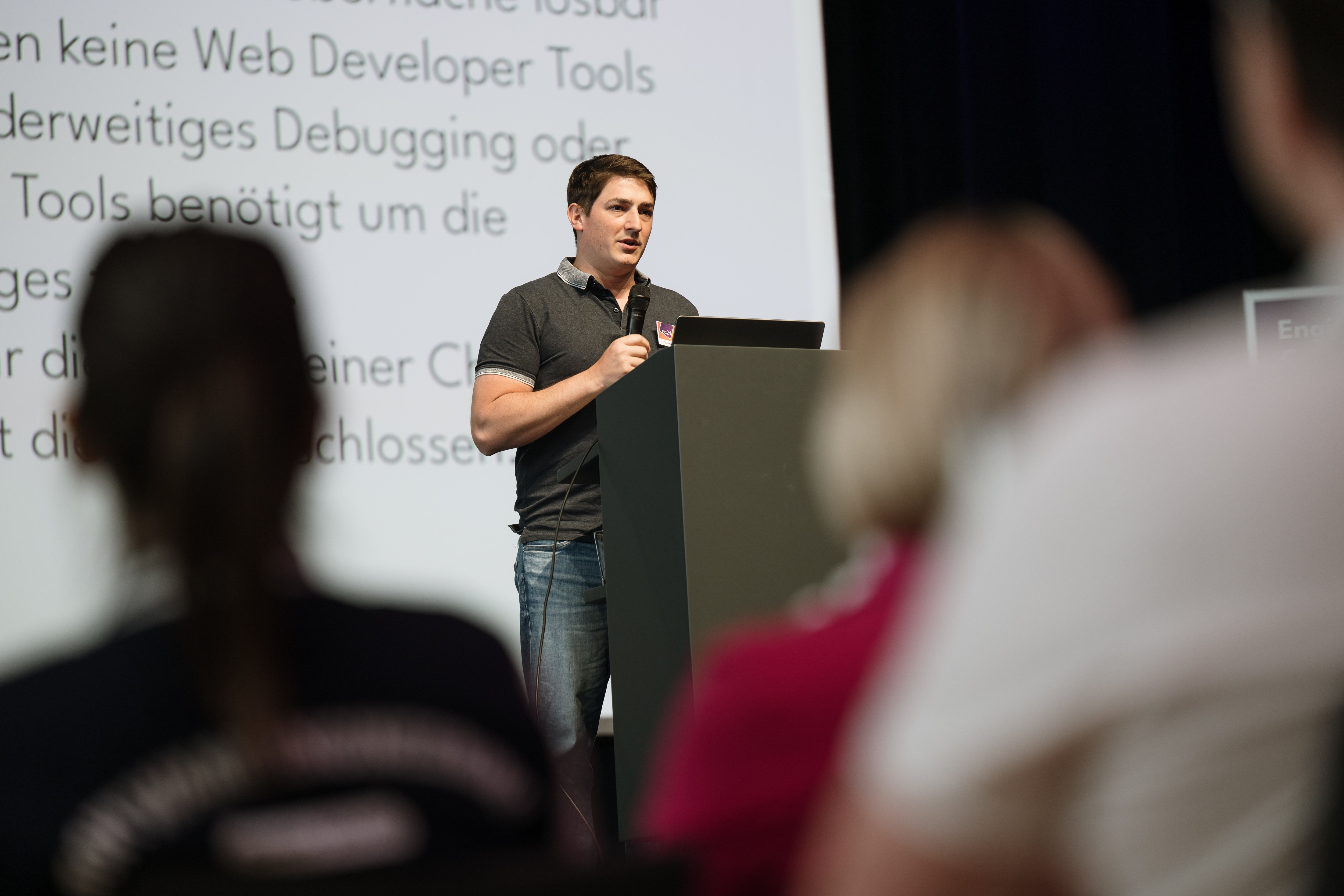
QAWare-EC-2024-1593

AI as a sparring partner

Another exciting aspect of Stephan’s perspective on modern software development is his approach to AI. With his academic focus on AI, he brings not only technical expertise but also a nuanced view. For him, AI is a powerful tool - one that is changing everyday work. But it’s not something to trust blindly.

He explains clearly how the work of developers has changed. It has become much more specification-driven. You need to be precise about what you want in order to use AI effectively. At the same time, you must never give up responsibility for your code. Simply adopting AI-generated output without understanding it means losing control over your system - and that must not happen. This mindset reflects the professional standards at QAware: embrace new technologies, but use them thoughtfully.


What Stephan would tell anyone considering a career in IT

His advice is simple and powerful: be curious and dare to take the first step. That’s all it takes. Not a perfect CV. Not the one “right” starting point. Not complete certainty that everything will work out immediately. Just the courage to begin and the curiosity to keep learning.

For many people considering a career in IT, this message is crucial. Because many barriers don’t come from a lack of ability, but from the feeling that you need to be perfectly prepared. Stephan’s journey shows something different: learning is not a side effect - it is the core of this field. Growth is not the exception - it is the norm. And that’s exactly why the tech world needs people with diverse backgrounds, perspectives, and paths.


What this story teaches us

Stephans story is more than just a portrait of an employee. It shows how QAware works: with teams that lift each other up, with a culture where questions are not seen as weakness but as part of doing great work, and with a commitment to quality that goes beyond buzzwords and is proven in everyday collaboration.

For clients, employees, and IT talents alike, this means working with people who think ahead, challenge ideas, take responsibility, and whose commitment doesn’t end with the contract. It means encountering a mindset that shows not only what people at QAware can do, but also how curious they are and how eager they are to keep growing.

There are places where you can grow without having to change who you are.

And in the end, Stephan’s story shows exactly what defines QAware at its core: technical excellence and human values are not a contradiction - they reinforce each other.


*At QAware, gender, background, or origin are not criteria for evaluation. What matters is your passion for technology.